How Perth’s Wet Season Reveals Which Building Management Companies Actually Deliver
The Test Window Nobody Schedules
Every building in Perth gets audited between May and September. Not by a certifier, not by a consultant, but by the weather. Perth’s rainfall is concentrated in these months, making the timing predictable and the damage preventable.
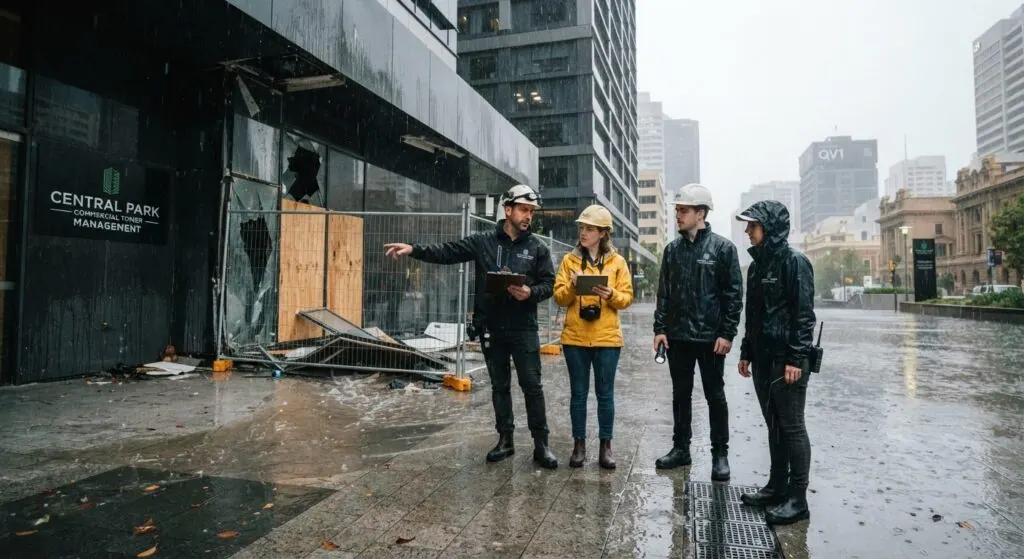
You can tell almost immediately which buildings have been properly managed and which have been coasting. The moment the first serious front comes through, the calls start. Roof leaks. Water running down corridors and pooling on floors that were never meant to hold it. Landscaping torn apart. Trees down across driveways and car parks. Cables cut. Windows shattered, and the ones still standing filthy for weeks.
None of that is random. Every one of those failures traces back to something that either was, or wasn’t, done before the season started.
That’s what makes May to September the only honest performance review your building management company will ever get. For eight months of the year, a reactive contractor and a preventative one look identical on paper: with the same invoices, the same reports, and the same polite emails. Storm season is the window where the difference becomes physical, visible, and expensive.
If you’re evaluating your current provider or vetting new building management services in Perth, this is the time to watch them.
What Storm Season Actually Does to a Perth Building
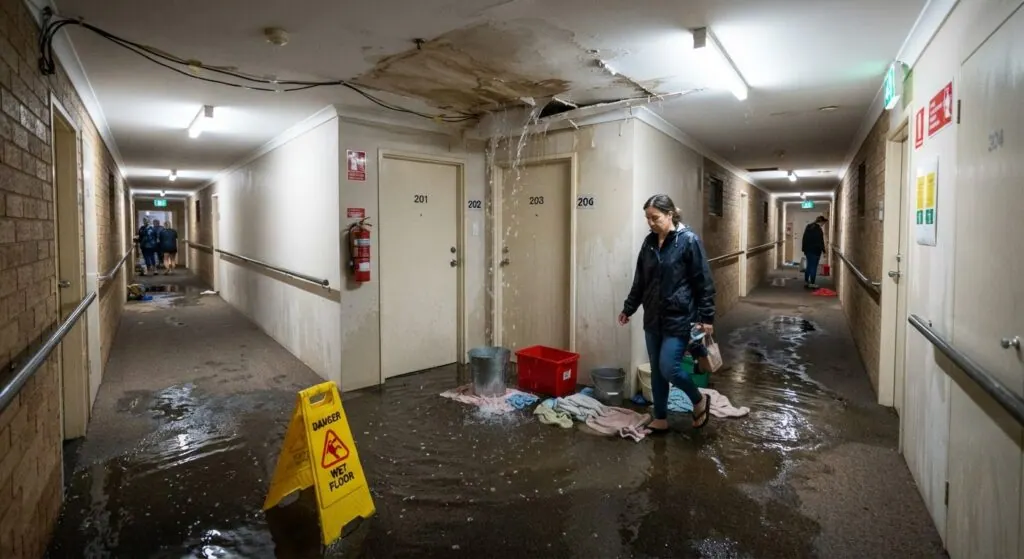
When we go out and inspect after a storm, the damage rarely comes back to something exotic. It comes back to three things.
Poor preparation. The work that should have been done before May simply wasn’t. Roofs, drainage, grounds and landscaping maintenance, trees, and landscaping—none of it was checked, cleared, or secured while the weather still allowed it. DFES makes the same point in its storm preparation guidance: this is year-round maintenance work, not something you start when a warning is issued. So the first real front doesn’t cause the damage; it just reveals it.
Staff not reporting on duty. This is the one owners don’t see on a report. When the weather turns, that’s exactly when people don’t show. Nobody is on site to shut a door, clear a drain, move a vehicle, isolate a cable, or escalate a leak while it’s still a leak and not a flooded corridor. A building without people on it during a storm has no defence at all.
Contractors who don’t anticipate the severity. Perth storms get underestimated constantly. Contractors plan for a normal winter’s day and get caught out by what actually arrives. They’ve scoped the wrong level of risk, so they’ve resourced the wrong level of response, and by the time they realise, the tree is already across the driveway, and the cable is already cut.
Those three failures compound. Poor preparation creates the vulnerability, absent staff let it run unchecked, and a contractor who never expected the severity turns up late to a much bigger job than the one that existed at 6 am.
Reactive vs. Preventative Building Management: The Tell
The difference between the two isn’t attitude or marketing. There are three concrete things you can check.
Enough staff to actually do the preparation. Preventative work is labour. Clearing, checking, securing, and repairing an entire site before the season starts takes bodies, and it takes them at a time of year when nothing appears to be wrong. A reactive contractor doesn’t carry that capacity, because on a fine day in April there’s nothing visibly forcing them to. A preventative one does, and that’s the whole reason their buildings hold up in June.
Scheduling that guarantees somebody is there. Not somebody on a phone list. Somebody on site, rostered, when the weather turns. The first thirty minutes of a storm event decide whether you’re dealing with an issue or an incident, and that window belongs to whoever is physically present. Good scheduling means emergencies and early concerns get addressed as they happen, not logged and queued for the next business day.
Contingency plans that are communicated before they’re needed. A plan sitting in a folder isn’t a plan. The value is in educating and advising people early, tenants, residents, committees, and staff—so everyone knows what happens, who to call, and what to expect before the first front arrives. When that’s been done properly, a storm is a managed event. When it hasn’t, it’s a scramble, and every decision gets made late and under pressure.
Ask your current provider which of those three they have. The answer usually takes about a minute.
The Warning Signs Your Current Provider Is Failing the Test
When strata committees come to us after a bad season, they rarely open with damage. They open with two complaints, and it’s the same two almost every time: response time and communication.
Response time is the first thing to break, because storm season removes the slack. A provider who takes a day to get to a non-urgent job in February is a provider who takes a day to get to a flooded corridor in June; the delay was always there; the consequences just weren’t. If you’re waiting hours to get someone on site while water is still coming in, that’s not bad luck on the day. That’s the normal service level, exposed.
Communication is the second, and it’s the one that erodes trust fastest. Committees describe the same pattern: they’re the ones chasing. They don’t know what’s been attended to, what’s still outstanding, what’s been made safe, or when someone is coming back. They find out about damage from residents rather than from their provider. By the time a report arrives, they’ve already fielded a week of complaints they couldn’t answer.
That matters beyond inconvenience. Under WA strata law, the strata company carries responsibility for maintaining common property, so when a provider goes quiet, it’s the council left holding the obligation.
If slow responses and silence are your experience this season, the rest of the audit is largely academic.
Best Building Management Services in Perth, WA, Near Me: What to Actually Look For
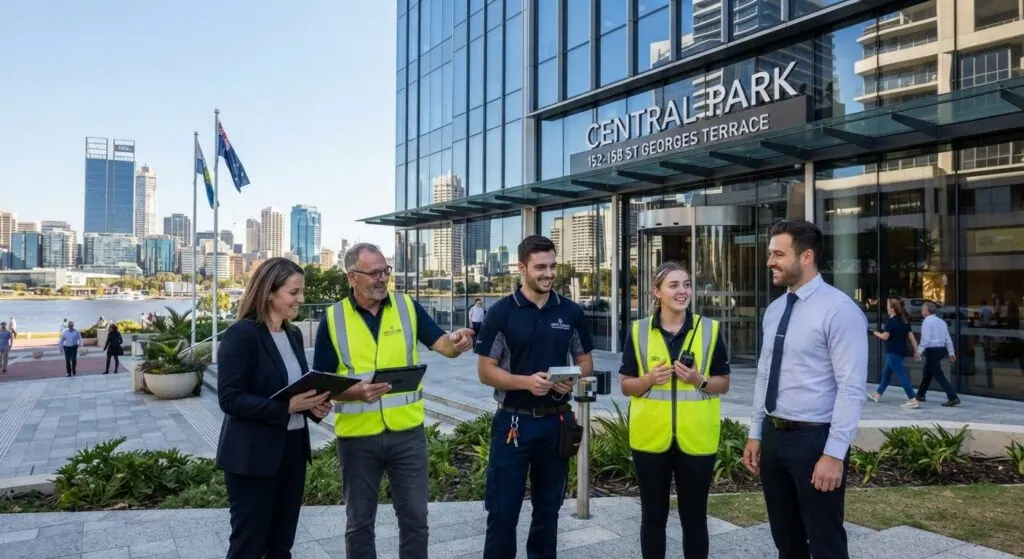
If you’re searching for the best building management services in Perth, WA, near you mid-storm, you’re not looking for a directory. You’re looking for a way to tell, quickly, whether the company you’re about to call is a real building management operation or someone who has simply used the words.
Here’s what to check. Almost all of it matters, and the list is short enough to work through in ten minutes.
- Certification. Look for third-party certification, not claims. Triple ISO certification—quality, safety, and environmental—means an independent auditor has verified how the company runs, not just what it says in a proposal. It’s the fastest way to separate a managed business from an ad hoc one.
- Integrated, not fragmented. A genuine provider of building management services in Perth delivers what your building needs under one accountable structure: management, cleaning services, grounds and landscaping, concierge, and the trades in between. If every element of your building is subcontracted to a different party, nobody owns the outcome, and storm season is exactly when that gap shows.
- Proven work across WA, not just a Perth postcode. “Near me” should mean genuinely local capability, not a listing. Ask who they’ve worked with and where. Cameron Facilities has delivered across Western Australia, mining and resources, commercial property, and strata complexes, and those are three very different operating environments. A company that has held up in all three has been tested in ways a single-sector contractor hasn’t.
- Rapid mobilisation. Ask directly how fast they can put people on your site and what happens when several buildings need them at once. This is where most providers quietly fall over in June.
- A real communication system. Not a mobile number and good intentions. We built and run the SiteIQ platform specifically so strata councils get information faster—what’s happened, what’s been actioned, what’s next—without having to chase anyone for it. Ask any provider what their equivalent is. If the answer is “we’ll call you,” you already know how the season will go.
- Regular contact, not incident-only contact. The best providers stay in touch with both their on-site staff and the council or owners as a matter of routine, so information flows before it becomes a problem and gets acted on professionally when it does.
Score any provider against those six points, including your current one. The results are usually clear.
The Wet Season Vetting Checklist
Before you sign anything or renew anything, put four questions to the provider. These are the ones committees should be asking and often don’t.
- What insurance coverage do you carry? Storm season produces damage, access issues, and liability questions. You need to know exactly what’s covered before an event, not while you’re arguing about it afterwards.
- How are you staffed? Not how many people are on the company’s books, how many are available to your building, and who is actually rostered when the weather turns. Preparation and response are both labour problems before they’re anything else.
- What does rapid response mean, specifically? Get a number and a process, not a reassurance. Ask what happens when three of their sites need help simultaneously.
- How will you communicate with us? Ask what system they use, how often you’ll hear from them, and whether you’ll be told about issues or expected to discover them.
A good answer covers all four without hedging. That’s the standard we hold ourselves to: Cameron Facilities is an integrated facilities management company that handles multiple jobs under one roof, so insurance, staffing, response, and communication all sit with one accountable provider instead of being spread across four parties who each blame the other three.
A red-flag answer is any version of “we’ll sort that out if it happens.”
What Preventative Building Maintenance Looks Like Done Properly
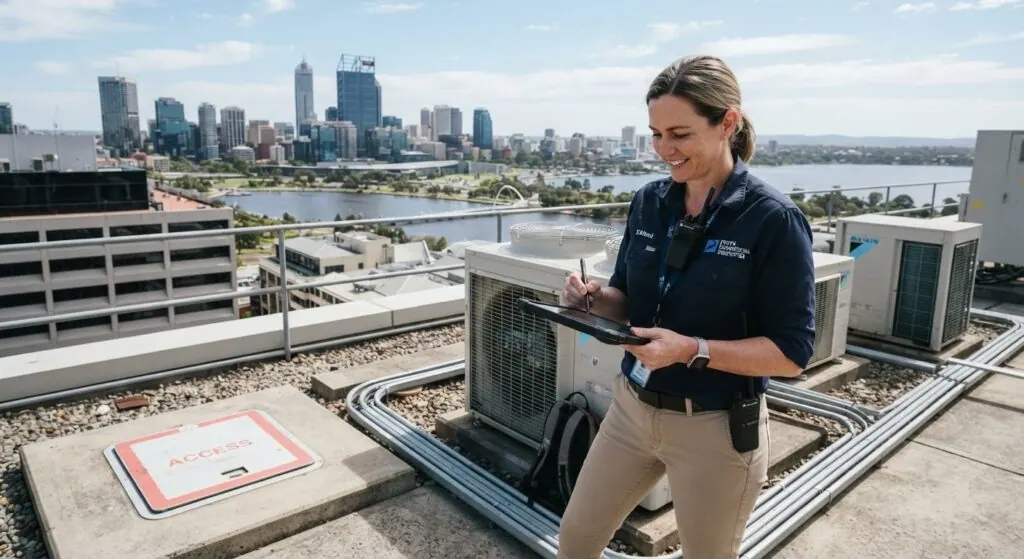
Preparation isn’t a walk around the car park with a clipboard. Done properly, it’s a full audit followed by planned work.
We inspect and audit the whole building: every room, every toilet and bathroom, halls, elevators, common areas, and the lot. Nothing is assumed to be fine because it looked fine last year.
From that audit, we build the work list and rank it by urgency. What’s likely to fail first, and what will cost the most if it does, gets attended to first. What can wait is scheduled rather than forgotten.
The order matters. Everything is checked and audited before work begins, not discovered halfway through it. That’s how you avoid the situation where a contractor turns up in June to fix one thing and finds three others that should have been picked up in March.
The result is a building that goes into the season with a known condition, a completed work list, and a plan instead of a set of assumptions that the first storm gets to test on your behalf.
Switching Building Management Providers Mid-Season
Committees often assume they’re locked in until the season ends. They’re not, and a bad provider in June is a compounding problem, not a temporary one.
The changeover is handled, not improvised. We reach out to the current provider directly about the situation so the transition is managed between professionals rather than left to the committee to referee. Every detail then goes to our property managers, so the approach is coordinated from day one, and the council gets a service that’s better organised than the one it’s leaving, not a gap while everyone works out who holds what.
The building shouldn’t feel the switch. That’s the whole point of doing it properly
Talk to Cameron Facilities
Storm season doesn’t create bad building management. It just makes it visible.
If this season has already shown you something about your current provider’s slow responses, silence when you needed information, and damage that preparation should have prevented, that’s data worth acting on. And if you’re vetting a new provider, use the criteria above rather than the marketing.
Cameron Facilities is a triple ISO certified integrated facilities management company delivering building management services across Perth and Western Australia, working with mining, commercial, and strata clients. Preparation, staffing, rapid mobilisation, and communication all sit under one roof, which is exactly why our buildings hold up through the months that expose everyone else’s.
Talk to us about your building:
Phone: (08) 6154 0910
Email: [email protected]
Recent Posts
-
 Perth Building Management: What Wet Season Really Reveals
 -
 Concierge Services for Commercial Buildings: Is It Worth the Investment?
 -
 How to Choose a Mining Camp Management Company in WA (2026 Buyer’s Checklist)
 -
 Commercial Cleaning Services in Perth: How to Compare Quotes Properly
 -
 Concierge Services Perth: What Premium Buildings Should Expect (and Pay)